
Modern power systems run on one simple idea, move electricity efficiently at high voltage, then deliver it safely at the exact voltage your equipment needs. That is the real answer to what is a transformer and why it matters on job sites, in facilities, and across the grid. A transformer manages voltage so power can travel long distances without major losses, then step down for buildings, machinery, and sensitive electronics, and the right sourcing process often starts with checking current transformer inventory.
In this guide, you will learn what a transformer does, how electromagnetic induction makes it work, and the key parts that affect performance and reliability. We will also compare the main transformer types, where they are used in industrial, commercial, and renewable projects, and how to source the right unit fast when lead times are tight.
A transformer is a static electrical device that transfers energy between two or more circuits through electromagnetic induction. It changes the voltage of alternating current without changing the frequency. Think of it as a pressure regulator for electricity. High voltage moves power efficiently over long wires, but equipment needs lower pressure to function safely. What are transformers in the context of a project site? They are the essential tools that step that energy down to a usable level for machinery and buildings.
In its simplest form, the unit consists of two coils of wire wrapped around a shared metal core. When electricity enters the first coil, it creates a magnetic field. This field then generates electricity in the second coil. By changing the number of wraps in each coil, design engineers control exactly how much the voltage increases or decreases. This process happens instantly and with incredible efficiency, often exceeding 99 percent in modern industrial designs.
The primary goal of this equipment involves modifying electrical potential. Without this shift, power could not be transported over miles of cable because resistance would cause massive energy loss. By increasing the voltage for transmission and decreasing it for distribution, these units ensure that energy reaches the end user with minimal waste.
The function of a transformer centers on voltage regulation. It either increases or decreases the potential difference in a circuit. High-voltage transmission reduces current, which lowers the heat produced in lines. This efficiency allows utilities to serve remote areas without losing half the power along the way. For industrial facilities, the machine provides the specific voltage required by heavy machinery or delicate electronics.
Beyond simple voltage changes, these devices also provide isolation. This means the incoming power line and the outgoing line are not physically connected. This gap protects sensitive downstream gear from surges or electrical noise coming from the utility grid. It acts as a shield, ensuring that a problem at the power plant doesn't become a disaster at a local manufacturing plant.
Modern power systems cannot exist without these units. They provide isolation between circuits, protecting sensitive equipment from surges. The purpose of a transformer also includes balancing loads across different phases of the grid. As the power industry moves toward electrification, these units facilitate the connection of renewable sources to the existing infrastructure. Reliability here is not optional; it is the difference between a productive day and a total site shutdown.
Consider the journey of electricity from a wind farm in Wyoming to a hospital in Denver. The energy starts at a low generation voltage, gets stepped up to hundreds of thousands of volts for the trip across the mountains, and then gets stepped back down multiple times before reaching the surgical suite, which is why wind power plants use a step-up transformer before sending power onto the grid. Every single one of those steps requires a transformer that works perfectly. If one fails, the entire chain breaks, leading to expensive repairs and lost production.
Understanding how does a transformer work requires a look at physics, specifically how magnets and electricity interact. There are no moving parts inside the main tank, which makes them highly efficient and durable. The process happens entirely through fields and flux, allowing for seamless energy transfer across different voltage stages.
Michael Faraday discovered the core concept used here in the 1830s. When an alternating current flows through a wire, it creates a fluctuating magnetic field around that conductor. If you place another wire nearby, that changing field induces a current in the second wire, in other words a varying magnetic field induces an electromotive force in the second coil. This is what is a transformer in electricity at its most basic level. No physical contact exists between the two circuits; the energy jumps through the magnetic flux.
This induction only works with Alternating Current (AC). Because AC constantly reverses direction, the magnetic field is always growing and shrinking. This movement is what allows the energy to transfer. Direct Current (DC) provides a steady field that does not move, which is why standard transformers cannot process DC power without additional electronic converters.
Every unit has at least two sets of coils. The primary winding receives energy from the source. The secondary winding delivers the altered voltage to the load. The ratio of turns between these two coils determines the output. If the secondary has more turns than the primary, the voltage goes up. If it has fewer, the voltage goes down. This simple math governs how massive amounts of power are controlled.
The thickness of the wire in these windings also matters. Higher current requires thicker conductors to prevent overheating. Design teams must balance the number of turns with the physical size of the wire to meet the specific power rating, or kVA, of the unit. Getting these details right ensures that the gear matches the actual load requirements of the facility.
A step-up unit increases voltage for long-distance travel. Power plants use these to push energy into the grid. Conversely, a step-down machine reduces voltage for local use. Most industrial sites require step-down units to convert utility-level power into the 480V or 208V needed for operations. Selecting the right direction for equipment is the first step in any successful electrical design.
You might also encounter one-to-one transformers. These do not change the voltage at all. Instead, they are used strictly for isolation. They protect expensive medical or laboratory equipment from dirty power. While they don't step the voltage up or down, they are critical for maintaining the health of sensitive digital systems in hospitals and data centers.
While the concept is simple, the execution requires high-grade materials and precise engineering. Every component must handle extreme heat and magnetic stress. Failure in one small part can lead to a catastrophic outage that shuts down an entire industrial facility.
The core acts as the highway for magnetic flux. Usually made from laminated silicon steel, it guides the magnetic field from the primary coil to the secondary coil. Engineers use laminations to prevent "eddy currents," which are small, internal loops of electricity that cause heat and waste energy. A high-quality core ensures the machine operates with peak efficiency.
The shape of the core also influences performance. Most modern units use a core-type or shell-type construction. In a core-type, the windings surround the laminated steel. In a shell-type, the steel surrounds the windings. Each has advantages for different sizes and voltages. Getting the core design right is essential for minimizing the hum and heat generated during operation.
These are the copper or aluminum conductors wrapped around the core. Copper is often preferred for its superior conductivity and strength, though aluminum is lighter and more cost-effective. The way these coils are wound and spaced determines the impedance and short-circuit strength of the unit. Proper winding techniques are critical for preventing internal faults during a power surge.
In high-voltage units, the windings are often divided into multiple sections or disks. This helps manage the electrical stress between the different layers of wire. Special paper or resin is used to keep the wires from touching each other. If this insulation fails, the electricity will arc between the turns, causing a short circuit that can destroy the entire machine in seconds.
Electricity likes to find the path of least resistance, so insulation is vital. Large units often use mineral oil to insulate the coils and carry away heat. This oil circulates through radiators on the outside of the tank. For indoor use, dry-type units use air or resin. Cooling is the lifeblood of the machine; if it gets too hot, the insulation breaks down, and the unit fails.
Monitoring these systems is a full-time job for modern sensors. Gauges track oil temperature, pressure, and liquid levels. Many units also feature fans that kick on when the load gets high. If these cooling systems are ignored, a fire is often the eventual result, which is why OSHA requirements for oil-insulated transformers installed indoors address fire-hazard precautions. Regular maintenance ensures the radiators are clean and the oil is free of moisture or dissolved gases.
Not all electrical needs are the same, which is why there are several categories of equipment. Choosing the wrong type can lead to safety risks or premature equipment death.
These are the giants of the industry. Typically found in substations, they handle high voltages (usually above 33kV) and high capacities. They are built for maximum efficiency at full load. Because they are so large and heavy, moving them requires specialized logistics. These units are sourced for large-scale utility and industrial projects where massive throughput is the priority.
These units are often custom-built to match the specific needs of a utility grid. They might include load tap changers, which allow the voltage to be adjusted while the unit is still running. This flexibility is vital for managing the fluctuating demands of a city. When moving hundreds of megawatts, every fraction of a percent in efficiency matters for the overall health of the grid.
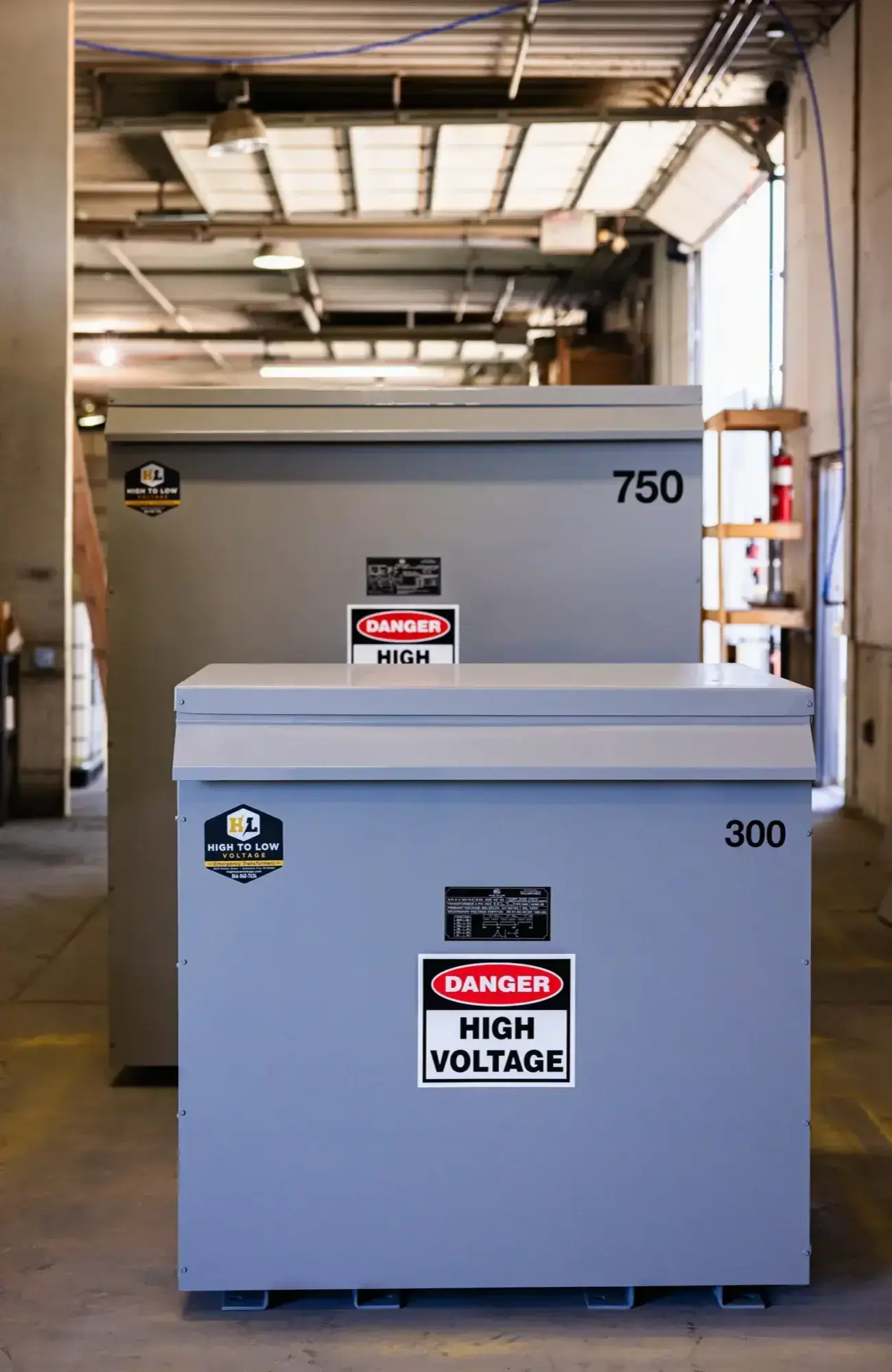
These units are the final step before power enters a building. Pole-mount units sit on utility poles in residential areas. Pad-mount units are the green boxes you see on the ground near commercial buildings. They step down the voltage to levels safe for lights, computers, and appliances, aligned with DOE’s overview of distribution transformers. They are designed for 24/7 reliability in all weather conditions.
Pad-mount units are especially common for shopping centers and office parks. They are tamper-resistant and designed to sit in public areas safely. Inside the steel cabinet, the high-voltage connections are hidden behind a barrier to prevent accidents. Because they are the most visible part of the grid, they are built to be sturdy and unobtrusive.
Dry-type machines do not use liquid for cooling. Instead, they rely on air circulation or cast-resin encapsulation. These are ideal for hospitals, schools, and high-rise buildings where the fire risk of oil-filled units is a concern. If you are specifying indoor equipment, a dry-type transformer quote helps confirm ratings, footprint, and lead time early. They require less maintenance because owners do not have to monitor oil levels or test for dissolved gases.
These units are usually rated for lower voltages and capacities than their oil-filled cousins. However, they are perfect for indoor environments where venting oil smoke would be impossible. They are also quieter, making them better for office settings. While dry-type units might cost more upfront, the savings on fire suppression and maintenance often make them the smarter choice for commercial interiors.
An isolation unit provides a physical gap between the input and output, which filters out electrical noise. This is great for protecting computers and lab equipment. An autotransformer uses a single winding for both primary and secondary connections, consistent with the federal definition for autotransformer. It is smaller and cheaper but does not provide electrical isolation. These are often used for small voltage adjustments in industrial machinery.
Autotransformers are frequently used in motor starters or to adjust the voltage for imported machinery. If a facility has a machine built for 380V but the shop has 480V, an autotransformer is a cost-effective way to close that gap. Just remember that because there is no isolation, a fault on the input side can travel directly to the machine.
The application of this technology spans every modern industry. From the charging of a phone to the operation of a steel mill, these machines are everywhere.
Utility companies are currently upgrading old infrastructure to handle more demand. This includes replacing aging units with modern, more efficient models. Grid modernization also involves adding smart sensors to monitor performance in real-time. Better monitoring means fewer surprises and faster response times when a storm hits the East Coast or Midwest.
This modernization is also necessary for two-way power flow. Old grids were built to send power from a plant to a house. Now, with rooftop solar, power flows back into the grid. Transformers must be upgraded to handle this change in direction without tripping breakers or causing voltage spikes. It is a massive undertaking that requires reliable sourcing of thousands of new units across different regions.
Factories and hospitals cannot function without reliable power. Large motors and HVAC systems require specific voltages that the utility grid does not provide directly. For a developer or general contractor, getting a transformer on-site is often the critical path item. If the power isn't on, the project stops. Access to quick-ship options ensures the construction schedule stays on track.
In these environments, reliability is the only metric that truly counts. A failed unit in a data center can cost millions in lost revenue every minute. Technicians work with facility managers to implement annual maintenance plans. By testing the oil and checking the connections regularly, teams find the small problems before they turn into site-wide emergencies.
Solar farms and wind turbines produce energy at various levels that must be stepped up to join the grid. Battery Energy Storage Systems (BESS) also require specialized transformers to manage the bidirectional flow of electricity. As the world moves toward a greener future, the demand for these renewables-ready units continues to rise. They must be built to handle the variable loads associated with sun and wind.
These units often face harsh environments. Solar farms are usually in hot, dusty deserts, while wind turbines might be in freezing northern plains. The insulation and cooling systems must be designed for these extremes. Furthermore, the harmonics created by solar inverters can cause standard transformers to overheat. A unit specifically rated for the dirty power produced by renewable sources is required.
In the current market, lead times from major manufacturers can stretch into years. For a business facing a failure or a tight deadline, waiting two years is not an option. This is where a proactive approach matters.
Finding a partner who locates solutions when the standard channels are blocked is the difference between opening on time or facing massive delays. If you need a bridge while permanent gear is built or repaired, transformer rentals can keep a site operational. That is where High to Low Voltage (H2LV) comes in, supporting projects with in-stock inventory, rebuilt options, rentals, and emergency replacements.
Buying new is great, but in-stock is better. At H2LV, the focus is on maintaining an inventory of new equipment ready to ship immediately. However, rebuilt units are a powerful alternative. A high-quality rebuild involves stripping a unit down, replacing the insulation, and testing it to modern standards. This provides a machine that performs like new but arrives in weeks instead of years. It is a sustainable and fast way to solve a power crisis.
Rebuilt gear is not used gear. It is remanufactured. Every critical component is replaced or restored to its original specs. In many cases, insulation can even be upgraded to better-than-original standards. This gives a facility a durable solution that meets all current safety codes without the long wait associated with a factory order.
Sometimes a project only needs power for a few months. During a planned maintenance outage or a large construction project, rentals are the smart play. Mobile transformers and skid-mount units are plug-and-play solutions. These rental-ready machines allow a site to keep working while permanent gear is being repaired or built.
Rental units are also great for disaster recovery. If a flood or fire takes out a main substation, a mobile unit can be on a truck and headed to the site within hours. These units are built to be tough and easy to connect, minimizing the time a crew spends waiting for the lights to come back on.
Equipment fails. Whether it is a lightning strike or old age, a blown transformer is an emergency. Field service teams handle repairs, oil testing, and annual maintenance plans to catch problems before they cause an outage. When a replacement is the only choice, quick-ship capabilities ensure a business isn't dark for long, and the fastest next step is often to start a quote with your specs and timeline. Professional teams take the work seriously so operators can stay focused on production goals.
Emergency service is about more than just shipping a box. It involves coordinating the logistics, the rigging, and the electrical testing to ensure the new unit is safe to energize. Understanding that every hour of downtime is a hit to the bottom line is essential. The goal for any service provider should be to function as a fast, dependable partner when things go wrong.
Transformers operate exclusively on alternating current (AC). They require a fluctuating magnetic field to induce voltage, which a steady direct current (DC) cannot provide. If DC is connected to a transformer, it will likely overheat and fail.
A well-maintained unit can last between 25 and 40 years. Factors like heat, moisture, and frequent overloading can significantly shorten this timeframe. Regular oil testing and cleaning help extend the operational life of electrical equipment.
Failure usually results in an immediate power outage for the connected load. In severe cases, internal faults can lead to fires or explosions. This is why having a backup plan or a rental partner is essential for expensive industrial operations.
Signs of trouble include loud humming, visible oil leaks, or tripping breakers. Operators might also notice a burnt smell or discolored paint on the tank. Regular thermal imaging and oil analysis can detect internal overheating before it becomes a total failure.
In some cases, yes. Technical teams can often upgrade the cooling systems or tap changers to handle a slightly higher load. However, if a facility has grown significantly, a complete replacement is usually the safest and most efficient path forward.


