
The wrong transformer size means failed equipment, unplanned downtime, and a costly emergency order. Whether sizing for a new installation or replacing a unit in the field, the decision matters more than most people account for upfront, especially when you may need to move quickly from planning into available transformer inventory.
Transformer sizing comes down to a few key variables: load, voltage, phase configuration, and real-world operating conditions. Get those right, and the transformer runs reliably for years. Get them wrong, and the consequences show up fast.
Every step is covered here, from core formulas and standard kVA ratings to real-world derating factors and what to do when you need a replacement under pressure.
For most standard applications, transformer sizing follows three steps: calculate load in kVA, add a safety buffer, and select the next standard size up. If you want to speed up the math, our transformer calculator can help you confirm the numbers before you move into final sizing. Everything below covers how to apply those steps accurately and what to watch for when conditions aren't textbook.
Single-phase: kVA = (Amps × Volts) / 1,000
Three-phase: kVA = (Amps × Volts × 1.732) / 1,000
Two formulas. The rest of the sizing process is about applying them correctly, accounting for real-world conditions, and landing on the right standard size.
Never round down. Rounding down is how undersizing happens, and undersizing is how transformers fail early.
Standard transformers come in fixed kVA ratings. Knowing where your calculated load falls within those ratings tells you what to order. Calculate your required kVA, add the buffer, then select the first standard size that meets or exceeds that total.
Run the formula for your phase type. Add at least 20% to the result. If your buffered load lands between two standard sizes, always go with the larger one. The cost difference between adjacent standard sizes is typically small. The cost of an undersized transformer failing in service is not.
Common single-phase kVA ratings:
0.5 / 1 / 1.5 / 2 / 3 / 5 / 7.5 / 10 / 15 / 25 / 37.5 / 50 / 75 / 100 / 167 / 250 / 333 / 500
Common three-phase kVA ratings:
3 / 6 / 9 / 15 / 30 / 45 / 75 / 112.5 / 150 / 225 / 300 / 500 / 750 / 1000 / 1500 / 2000 / 2500
kVA is the unit that determines transformer size. Calculated from the load's current draw and operating voltage, it defines how much power in AC circuits the transformer must supply continuously. Underestimate it and the transformer runs hot. Size it right and the unit runs within its thermal rating across its service life.
Single-phase systems power commercial buildings, light industrial facilities, and residential applications up to 240V. The calculation is straightforward once the load amperage and secondary voltage are confirmed, and it becomes easier to move from theory to product selection when you can compare relevant single-phase transformers.
kVA = (Amps × Volts) / 1,000
Example: A load drawing 45A at 240V: (45 × 240) / 1,000 = 10.8 kVA With a 20% buffer: 10.8 × 1.2 = 12.96 kVA → Order a 15 kVA transformer.
Three-phase systems power heavy industrial equipment, large motors, and commercial HVAC. The multiplier 1.732 (the square root of 3) accounts for the phase relationship between the three lines. Leave it out and the calculation produces a significantly undersized result. For applications like these, reviewing available three-phase transformers is the logical next step after the load is confirmed.
kVA = (Amps × Volts × 1.732) / 1,000
Example: A three-phase load drawing 80A at 480V: (80 × 480 × 1.732) / 1,000 = 66.4 kVA With a 25% buffer: 66.4 × 1.25 = 83 kVA → Order a 112.5 kVA transformer.
When the outgoing transformer is still accessible and its nameplate is readable, that data is the fastest path to a correct replacement. The transformer nameplate carries the kVA rating, primary and secondary voltage, phase configuration, impedance percentage, and temperature class.
Match all of those specs, not just the kVA. A transformer with the right kVA but mismatched impedance or wrong voltage creates a different set of problems. Pull every value off the nameplate before placing an order.
Every step exists for a reason. Skipping any of them is exactly where sizing errors get introduced.
Determine the supply voltage (primary) and the load voltage (secondary). Common primary voltages include 120V, 240V, 480V, 2400V, and 4160V. Secondary voltages depend on what the transformer is feeding. If that relationship is unclear, reviewing a step-up vs. step-down transformer can help you confirm which direction the voltage needs to move.
A voltage mismatch means the transformer won't perform correctly, regardless of how accurate the kVA calculation is.
Add up the amperage of all connected loads. For motor-heavy applications, account for starting current separately (covered in the real-world section below). Use total connected load as the basis for the kVA calculation, not a partial list of what's currently running.
Single-phase and three-phase transformers are not interchangeable. Confirm the phase configuration of both supply and load before running any calculations. Using the wrong formula, or ordering the wrong phase type, creates a problem that doesn't become obvious until the equipment arrives on site.
A 20% margin is the baseline for most applications. Motor-heavy loads, variable demand, or expected facility growth call for 25–30%. After applying the margin, select the next standard kVA size up. An oversized transformer handles load variation without thermal stress. An undersized one accumulates that stress until it fails.
Three common scenarios. Each one calls for a different approach.
When the connected load is documented and voltage and phase are confirmed, run the formula. Calculate, add the buffer, round up. Five minutes of math produces a defensible specification that holds up under scrutiny.
A readable nameplate on the failed or outgoing transformer is a complete specification. Pull every value from it: kVA, primary voltage, secondary voltage, phase, impedance, temperature class. A direct nameplate match is the fastest path to a correct replacement order.
Incomplete load data and a missing nameplate are more common in the field than they should be. When that happens, identify the highest-draw equipment on the circuit, apply the appropriate formula, and size conservatively with a 30% buffer. An oversized transformer runs inefficiently at very light loads. An undersized one fails.
Real-World Transformer Sizing: Why the Formula Alone Isn't Enough
The formula gives a starting number. What follows is the adjustment process that turns that number into a specification that actually holds up under operating conditions.
Motors draw 6–10 times their running current during start-up. That surge lasts only a few seconds, but a transformer sized only for steady-state running load takes repeated thermal hits from it. Over time, that accumulated stress degrades insulation.
For motor-heavy applications, calculate running load kVA first, then add capacity for the largest motor's inrush. A practical rule: add 1.25 to 1.5 times the largest motor's nameplate kVA to the running load total before applying the standard buffer.
A transformer sized exactly for today's load becomes a problem the moment anyone adds equipment. Facilities expand. Production lines get upgraded. Additional circuits appear.
Build in headroom beyond the standard margin, typically an additional 15–25%, to cover foreseeable growth. The alternative is a second sizing exercise and another transformer purchase in two years, often under worse conditions than the first one.
Standard transformer ratings assume sea-level operation and ambient temperatures at or below 40°C (104°F). Once equipment is expected to operate in ambient temperatures exceeding 40 °C, temperature-related rating and marking considerations become more important. Both conditions reduce rated capacity when they're exceeded.
Facilities in hot climates or high-altitude locations need to apply these adjustments before selecting a standard size. Ignoring derating means the transformer operates closer to its thermal limit than the nameplate suggests, which shortens service life.
A transformer failure shuts down production. Every hour of downtime has a measurable cost, and the pressure to get a replacement ordered fast doesn't make the sizing process any easier. Short time frames are exactly when mistakes happen.
Start with what's available on-site:
When none of that produces a clear number, identify the highest-draw equipment on the circuit and size conservatively upward. A slightly oversized unit in service keeps operations running while exact specifications are confirmed. A prolonged production halt does not.
A replacement transformer needs to match more than kVA. Before placing an emergency order, confirm:
Ordering without confirming all of these is how a fast replacement turns into a second emergency order. H2LV maintains in-stock inventory across standard transformer sizes so facilities match specifications quickly and get a unit shipped without the lead time of a custom build.
When a permanent replacement isn't available immediately, a rental transformer keeps operations running while the right unit is sourced. Size the rental based on the same load calculation used for the permanent unit. If the permanent transformer's nameplate is gone, use the highest available circuit breaker rating as the ceiling and size the rental to match.
Account for any temporary load additions that weren't on the original circuit. Rental situations often involve improvised power distribution, and undersizing a temporary unit creates a second failure before the permanent fix is complete.
Most transformer failures in service trace back to decisions made before installation. These three mistakes show up repeatedly.
An undersized transformer runs hot. Thermal stress degrades insulation over time, and insulation failure is the leading cause of transformer failure in service. A stronger grasp of transformer maintenance also helps explain why that heat buildup shortens service life. The unit might operate for months before showing obvious signs of stress, then fail suddenly at the worst possible moment.
The fix costs almost nothing: apply a margin and select the next standard size up. The price difference between adjacent standard sizes is negligible compared to the cost of an emergency replacement and unplanned downtime.
kVA measures apparent power, and transformers must handle apparent power, not just real power (kW). That is also why power factor and kVA matter when you are thinking through what the transformer actually has to carry. In facilities with variable frequency drives, switching power supplies, or other non-linear loads, harmonic distortion adds directly to transformer losses and heat generation.
A standard kVA calculation underestimates the actual thermal load in these environments. EPRI notes that harmonic behavior can increase transformer resistance through stray eddy current losses, which is part of why heat becomes a bigger issue under non-linear loads. K-factor rated transformers are designed for high-harmonic applications.
Using a standard unit in a high-harmonic environment accelerates insulation degradation and shortens transformer life significantly.
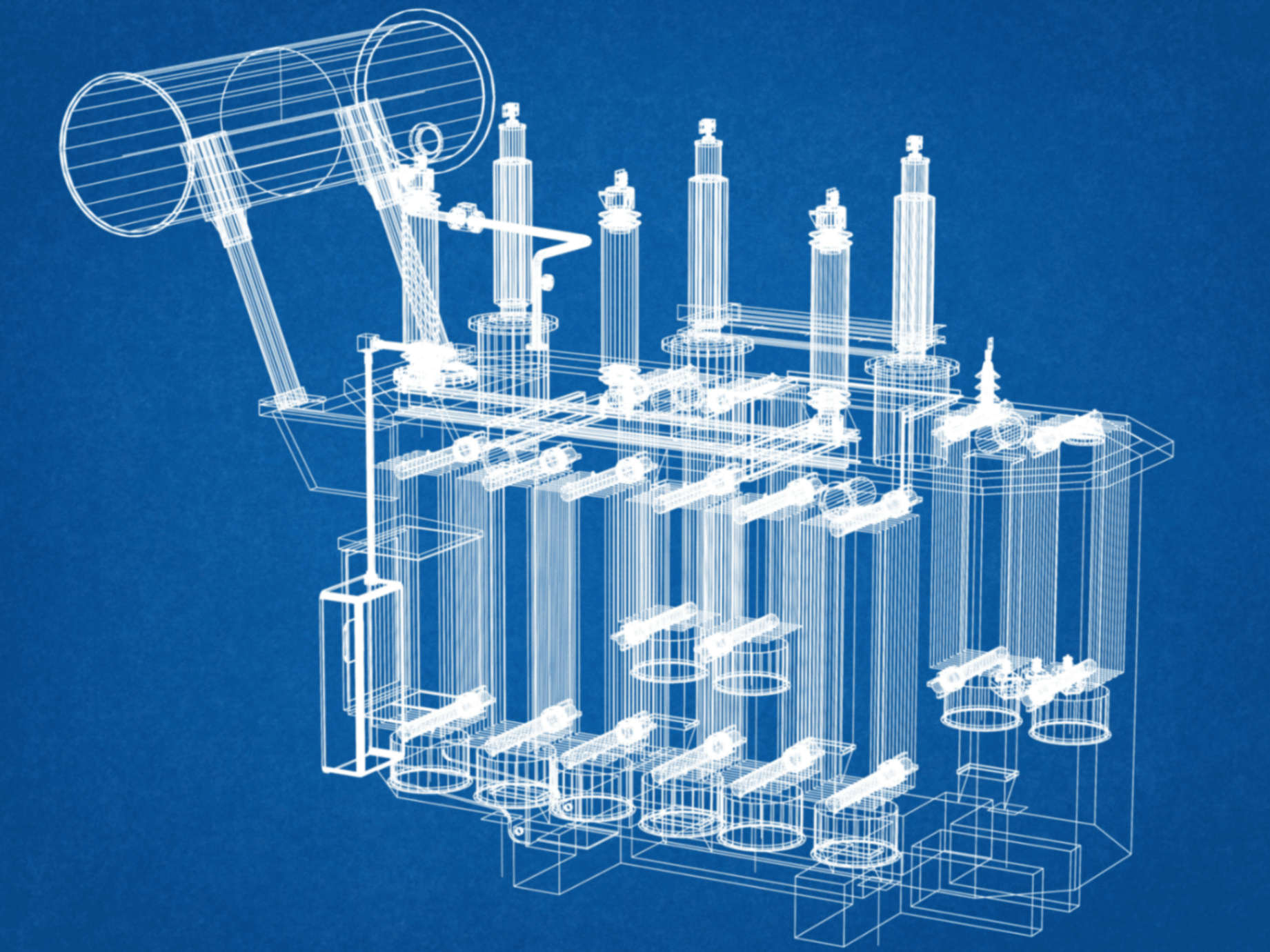
A transformer that doesn't match the voltage, phase, or impedance specification might come with a lower price tag. It's also the wrong transformer. Mismatched impedance causes current-sharing problems in parallel banks. Wrong voltage ratings damage connected equipment. An incorrect phase configuration means the unit won't function at all.
Specify accurately first. Compare prices within that specification second. Reversing that sequence creates expensive problems that a lower purchase price never recovers.
Production downtime isn't a theoretical risk. When a transformer fails, the clock starts immediately. Getting the right replacement to site quickly requires both a correct specification and a supplier with inventory ready to move.
H2LV carries a broad inventory of single-phase and three-phase transformers across standard kVA ratings. No waiting weeks for a custom build. If the size you need is a standard rating, it's likely on the shelf and available to ship. Urgent replacements are exactly what this inventory exists for.
When the specification isn't fully clear, bring whatever information is available: load amperage, voltage, phase configuration, and any nameplate data from the failed unit. We help facilities confirm the right specification before the order goes in, not after the wrong transformer arrives on site.
Reach out directly for a fast sizing quote. The faster the right information comes in, the faster the right unit ships out.
Single-phase: kVA = (Amps × Volts) / 1,000. Three-phase: multiply by 1.732. Add a 20% buffer, then select the next standard kVA rating up.
Calculate required kVA from load and voltage, add a minimum 20% safety margin, then select the next standard size above your buffered total. Never size down.
Yes. An oversized transformer runs cooler and handles load spikes without thermal stress. The trade-off is reduced efficiency at very light loads, which is rarely a meaningful concern.
Always size for peak load. Transformers must handle the highest demand placed on the circuit, including motor start-up inrush current and simultaneous operation of all connected equipment.
Yes. Dry-type and oil-filled transformers have different temperature ratings and derating characteristics. High-altitude and high-ambient-temperature installations require specific derating adjustments regardless of transformer type.


